
Reviewed · RIO DE JANEIRO TOURS
African Heritage: Gastronomy and Musicality Experience
Rio’s African heritage is not tucked away in a museum here. This five-hour private tour connects memorial sites and public art with a meal tasting and a hands-on percussion workshop in Pedra do Sal, a neighborhood central to Afro-Brazilian culture.
I like two things in particular: the route links difficult history to living culture, so you move from an archaeological site and a historic port to food, music and community; and the long Pedra do Sal stop gives you time to do more than glance at a landmark. Past guides Isabella and Jaíse are praised for making complex history clear and personal.
One consideration: nearly three of the five hours are assigned to Pedra do Sal, and drinks are not included. The food tasting is also listed as unsuitable for people with food restrictions, so check before booking if you have dietary needs.
Key points
- Start at the Museu do Amanhã: Meet at Praça Mauá at 10:00 am, then explore nearby sites in Rio’s port area.
- See the Morrinho model at MAR: A detailed miniature of Pereira da Silva favela offers a view beyond familiar stereotypes.
- Visit places tied to slavery and memory: The IPN archaeological site and Cais do Valongo give the history a physical setting.
- Spend three hours at Pedra do Sal: The main cultural stop combines Afro-Brazilian and Yoruba food tasting with a percussion workshop.
- Finish at Largo de São Francisco da Prainha: This is a lively square with bars, music and historic Portuguese-style buildings.
- Book for the conversation, not just the stops: The strongest part of the experience is the guide’s explanation of how African heritage shapes Brazil today.
Rio’s African heritage, told across the port district
This experience is best understood as a guided introduction to the Black history and culture of Rio, rather than a standard city sightseeing loop. It brings together art, memorial sites, neighborhood history, food and music, with a focus on the African diaspora and its continuing influence on Brazilian life.
That mix matters. A visit to a historic site can tell you what happened, but food and music help show how traditions carry on. Here, the route builds toward Pedra do Sal, where the longer stop offers time to taste, listen and take part.
The tour is private, so only your group participates. That can make the subject easier to discuss than it might be in a large group. The experience lasts about five hours and starts at 10:00 am at Museu do Amanhã, ending at Largo de São Francisco da Prainha.
More history tours around Rio de Janeiro:
- Rio de Janeiro: Historic Rio and Santa Teresa Half-Day Tour
★ 4.4 · 228 reviews - Rio de Janeiro: Little Africa Heritage Walking Tour
★ 4.9 · 177 reviews - Explore Little Africa : Unveiling Afro Heritage in Rio de Janeiro
★ 5.0 · 97 reviews
The Morrinho model at Rio Art Museum
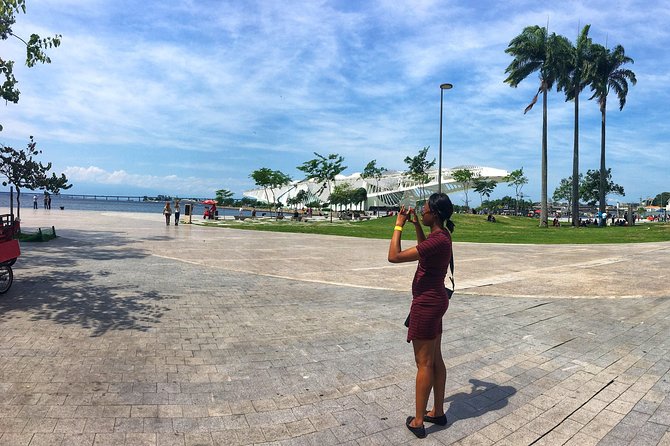
The first listed stop is Museu de Arte do Rio, or MAR, where you see the Morrinho Project. Its permanent model recreates the streets, residents and daily life of Pereira da Silva favela in considerable detail.
The model gives you a chance to look at favela life as more than a shorthand for hardship or violence. It foregrounds daily routines, creativity and community, and the tour frames it as a way to question familiar stereotypes. That perspective is useful early in the day, before the route turns to sites connected to enslavement and historical memory.
You spend about 25 minutes here, and admission is free. Think of it as a focused introduction rather than a full museum visit. The stop description centers on the Morrinho installation, not a broader tour of MAR’s collections.
Kobra’s mural and the stories behind its figures
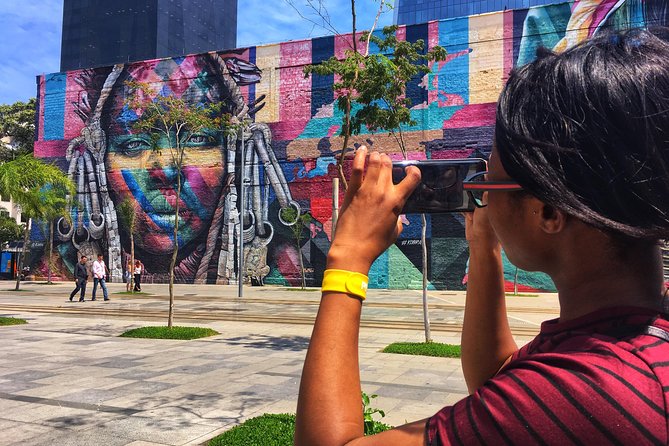
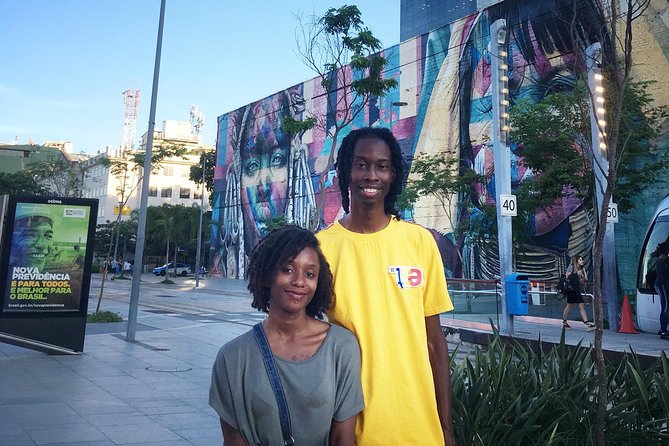
The route also includes a stop to contemplate a mural by Eduardo Kobra, described as the world’s largest graffiti mural. Its subject includes ancestral ethnic groups and older cultures connected, directly and indirectly, to Brazil’s story.
Public art can make history visible in a different way from a museum display. Here, the mural gives the guide a chance to discuss the peoples and cultural roots that shaped the country. The supplied schedule does not give a separate visit length or admission detail for this stop, so treat it as a brief route-side look rather than a timed museum visit.
IPN: looking at the cost of the slave trade
At Instituto de Pesquisa e Memoria Pretos Novos, or IPN, you visit an archaeological site and a permanent exhibition that includes bones of Africans discovered there. The stop lasts about 40 minutes, and IPN tickets are included.
This is likely to be one of the tour’s most sobering moments. The remains connect the history of enslavement to a real place and to the people whose lives were treated as expendable. That physical evidence can sharpen your understanding of the scale and brutality of Brazil’s slave period in a way that dates and summaries alone cannot.
Allow yourself room to take in the material at your own pace. The subject is difficult, and the value of the visit is not in rushing through it. The guide’s role is especially important here: past participants have highlighted clear explanations of Brazil’s Black history and the wider social and economic forces that shaped Rio.
More trips and days out around Rio de Janeiro:
- Rio de Janeiro: 6-Stop Highlights of Rio with Lunch
★ 4.4 · 5,157 reviews - Christ the Redeemer Entry Ticket by Corcovado Train
★ 4.4 · 4,476 reviews - Rio de Janeiro: Rocinha Favela Walking Tour with Local Guide
★ 4.8 · 3,052 reviews - Rio de Janeiro: Sugarloaf Cable Car Official Ticket
★ 4.6 · 2,873 reviews
Cais do Valongo and Little Africa
Next comes Cais do Valongo, the historic pier, followed by the area known as Little Africa. The scheduled stop at the pier is about 15 minutes, with no admission ticket required.
Valongo’s importance reaches beyond a single city block. The site is presented as a key place for understanding the history of enslavement and the African presence in Brazil. In Little Africa, the route shifts from the port’s history to the neighborhood traditions and cultural life that grew around it.
A short stop can only introduce the place, not cover every layer of its past. The guide’s running account helps connect this site to the IPN visit and to the living culture you encounter later. If you are especially interested in the history, use the walk between stops to ask questions.
Pedra do Sal: food, percussion and community
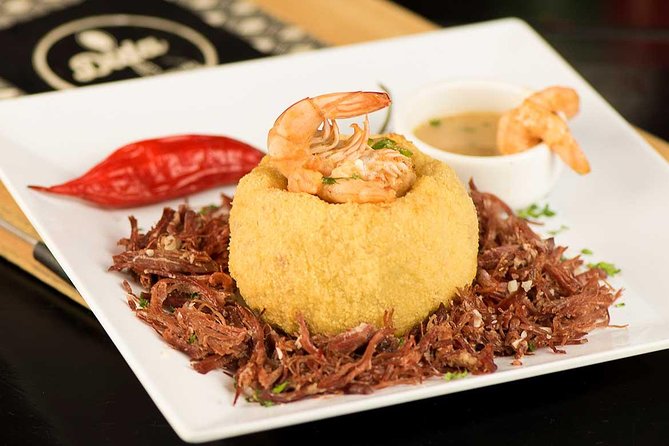
The main event is the three-hour stop at Pedra do Sal. This area is described as a home of cultural resistance and an important place for preserving Afro-descendant heritage. It is also associated with weekly outdoor samba sessions, when local people celebrate Rio’s Afro-Brazilian legacy through music.
The extended time here is a real strength. Instead of treating the neighborhood as a photo stop, the tour makes room for a tasting of Afro-Brazilian and Yoruba dishes, followed by a percussion workshop led by an instructor and drummer from the African continent. The food is described as typical of traditions also practiced in religions of African origin, giving the tasting a cultural context as well as a culinary one.
The tasting is included in the $110 price, but drinks are not. The experience does not name the specific dishes, so expect a sampling rather than a guaranteed menu. If you have dietary restrictions, the tour is explicitly described as unsuitable, so ask the operator before booking rather than assume substitutions will be available.
The workshop is another practical way to connect the story to sound and rhythm. You focus on percussion with an instructor, rather than simply watching a performance. You do not need to arrive as a musician, but you should be ready to participate in a hands-on activity.
Pedra do Sal is also where the historical material becomes present-day culture. The tour links the endurance of Afro-descendant communities with food, music and shared public space. For many people, this will be the most memorable part of the day, though anyone expecting a long, formal samba show should note that the listed activity is a percussion workshop and the neighborhood is associated with weekly outdoor samba sessions.
A final stop at Largo de São Francisco da Prainha
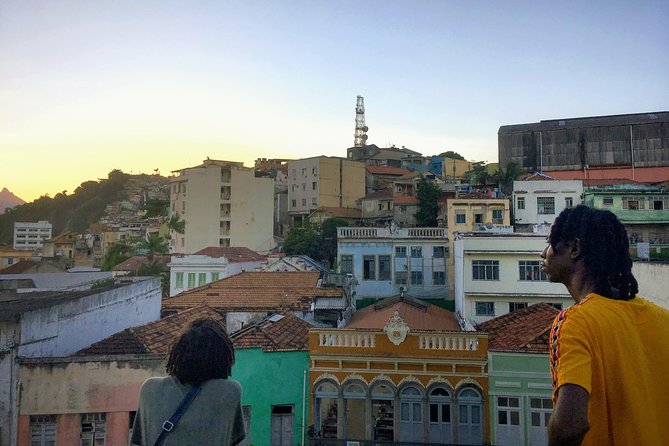
The tour ends at Largo de São Francisco da Prainha, a square surrounded by Portuguese-style buildings and local bars. The scheduled visit is about 15 minutes, and admission is free.
The square is described as a place where samba, funk, jazz and chorinho can be heard as evening approaches. Since this tour begins at 10:00 am and lasts about five hours, you should not assume you will catch the sunset or the evening music during the scheduled visit. The stop is better treated as a brief introduction to a neighborhood gathering place.
You can stay in the area after the tour if you want to spend more time at a bar or enjoy the local atmosphere, but that would be on your own. Drinks and snacks at the square are not included in the tour price.
What the $110 price gets you
At $110 per person, this is not a bargain-basement walking tour, but the price covers a private experience of about five hours, the IPN ticket and the Afro-Brazilian food tasting. The percussion workshop and the guide’s interpretation are central parts of the experience, too.
The value depends on what you want from Rio. If you mainly want famous views and quick photo stops, this is probably not the best use of your budget. If you want a guided account of Black history in Brazil, with time for food, music and questions, the private format and substantial Pedra do Sal visit make a stronger case for the price.
The operator does not list drinks as included, and no transport details are provided. Check how the group will move between stops and budget for any drinks you want along the way. The route begins at Museu do Amanhã and ends at Largo de São Francisco da Prainha, so you should plan around those separate locations.
The experience is often booked about 69 days in advance. That is a useful signal to plan ahead if the date matters to you, though it does not guarantee that every departure will sell out.
Who will get the most from this experience

I would choose this tour if you want more than a general overview of Rio and are interested in how the African diaspora shaped Brazilian culture, society and daily life. It should suit curious adults, solo visitors and couples, as well as families who are comfortable discussing slavery and its legacy.
Past experiences name guides Isabella and Jaíse. Isabella is repeatedly associated with clear, accessible explanations and a strong focus on Black history; Jaíse is also described as passionate about a diasporic perspective. Since the information does not say who will lead a particular departure, confirm the guide when booking if that matters to you.
This is not an ideal choice if food restrictions prevent you from taking part in the tasting, or if you prefer a tour built around major monuments and a fast pace. The historical stops can be emotionally demanding, and the food and workshop take up a substantial share of the schedule. In return, you get a more grounded view of Rio than a checklist of scenic landmarks can provide.
My recommendation: Book it if you want to understand the connections between slavery, memory and living Afro-Brazilian culture, and if you are comfortable spending a good part of the day listening, tasting and taking part. If your priorities are panoramic views, drinks included or a tightly timed museum circuit, choose another outing.
FAQ
How long is the African Heritage: Gastronomy and Musicality Experience?
The experience lasts about five hours. The Pedra do Sal portion is scheduled for three hours, with shorter visits at the other listed stops.
Where does the tour begin and end?
It starts at Museu do Amanhã, Praça Mauá, 1, at 10:00 am. It ends at Largo de São Francisco da Prainha.
Is this a private tour?
Yes. Only your group participates.
What is included in the price?
The listed inclusions are an Afro-Brazilian gastronomy tasting and tickets to IPN. Drinks are not included.
Is the food tasting suitable for people with dietary restrictions?
The experience is listed as unsuitable for people with food restrictions. If you have dietary needs, check with the operator before booking.
Can I cancel for a full refund?
You can cancel at least 24 hours before the experience starts for a full refund. Cancellations made less than 24 hours before the start are not refunded.
Just added around Rio de Janeiro
- Paraty Historical City Walking Tour★ 4.1 · 8 reviews
- Rio de Janeiro: Zip Lining and Canopy Tree Tour★ 3.3 · 6 reviews
- Hang gliding flight in Rio de Janeiro★ 5.0 · 6 reviews
- Trindade Day Trip: Nature and Sea Adventure from Paraty★ 4.6 · 5 reviews
- Vidigal Favela Tour★ 4.4 · 26 reviews
- Rio de Janeiro: Attend a Vasco da Gama game with local guide★ 4.8 · 9 reviews
- Rio Highlights: Christ, Sugarloaf, and More in a Private Tour★ 5.0 · 36 reviews
- Buzios: City Tour by Trolley with 12 Beaches and Pickup★ 4.5 · 4 reviews
Rio de Janeiro Tours, compared.

Christ the Redeemer Entry Ticket by Corcovado Train
Read our review →


Christ the Redeemer, Sugarloaf, Selaron & BBQ Lunch
Read our review →


Browse the lists this tour appears in