
Reviewed · RIO DE JANEIRO TOURS
Explore Little Africa : Unveiling Afro Heritage in Rio de Janeiro
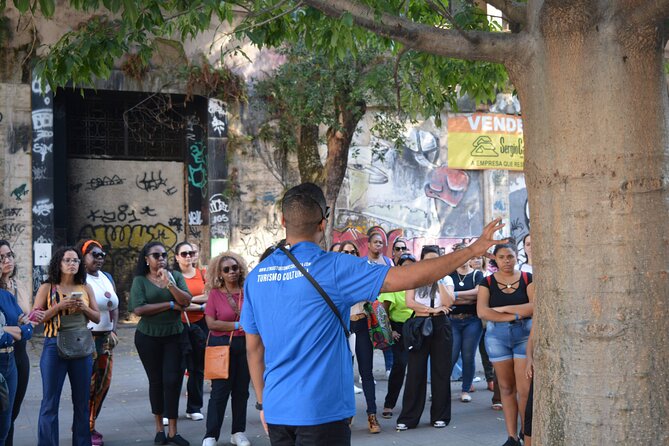
Rio’s Little Africa tour follows a story that can be easy to miss if your visit sticks to the city’s best-known sights. Over three and a half hours, you move between churches, a memorial institute, a museum, a former wharf and neighborhood squares, with a guide explaining how these places relate to Black life and Afro-Brazilian history.
I like two things in particular: the route links several important sites instead of treating them as isolated stops, and the guide’s explanations help you see beyond the buildings and street names. Guides who have led the tour include Carolina, Rafael, Malu, Carol and Val. One consideration: there is a considerable amount of walking, and some museums close on Sundays and during specified holiday periods.
What makes this tour worth your time
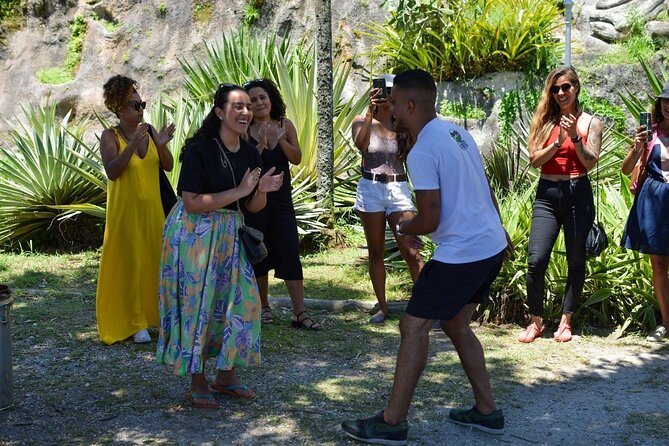
- A route through Little Africa: Six stops take you from Santa Rita to Largo São Francisco da Prainha, with a short VLT ride included.
- History told on location: The route connects the Pretos Novos Institute, Valongo Wharf and Pedra do Sal to the region’s Afro-Brazilian heritage.
- A guide-led experience: Carolina, Rafael, Malu, Carol and Val are among the guides associated with the tour.
- A compact but substantial outing: Expect about three and a half hours, with stops that range from 20 to 40 minutes.
- A small-group cap: The maximum group size is 20, which gives the guide room to explain and respond to questions.
- A few planning details matter: The New Black Institute is closed Sundays, and all museums close from December 16 to January 5 and during Carnival season.
Start at Santa Rita, then look beyond the façade
The tour begins at Santuário de Santa Rita, in central Rio. The first listed stop is Matriz da Paróquia de Santa Rita, where the group spends about 20 minutes outside. This is a short introduction to the area and its heritage, framed through a decolonial perspective.
That framing matters. The tour is not simply a checklist of old buildings. Its purpose is to help you consider whose stories are visible in Rio’s public spaces, and whose have often been left out. Your guide supplies the context, so this stop is more about listening and looking than going inside a church.
The short visit also sets the tone for a route that asks you to connect places to people and memory. If you prefer tours built around long indoor visits, this one may feel different: several stops are external, and much of the experience depends on the guide’s account of what happened here.
More history tours around Rio de Janeiro:
- Rio de Janeiro: Historic Rio and Santa Teresa Half-Day Tour
★ 4.4 · 228 reviews - Rio de Janeiro: Little Africa Heritage Walking Tour
★ 4.9 · 177 reviews - Paraty: Historic Centre Walking Tour & Cachaça Tasting
★ 4.8 · 96 reviews
The Pretos Novos Institute gives the route its weight
The next stop is the Instituto de Pesquisa e Memória Pretos Novos, or IPN, where the tour spends about 40 minutes. The institute is dedicated to research and memory, and admission is included. The route identifies a ticket for the New Black Institute as part of the price.
This visit is central to understanding why the tour matters. The sites are not presented as scenery alone: the institute gives you a place to reflect on the human cost behind Rio’s history of slavery. The subject can be painful, but the tour treats it directly and with care rather than smoothing it over.
A practical note: the New Black Institute is closed on Sundays. The provider also says all museums close from December 16 to January 5 and during Carnival season. Since the route includes museum visits, check that your date avoids those closures before booking.
MUHCAB puts Afro-Brazilian culture in view
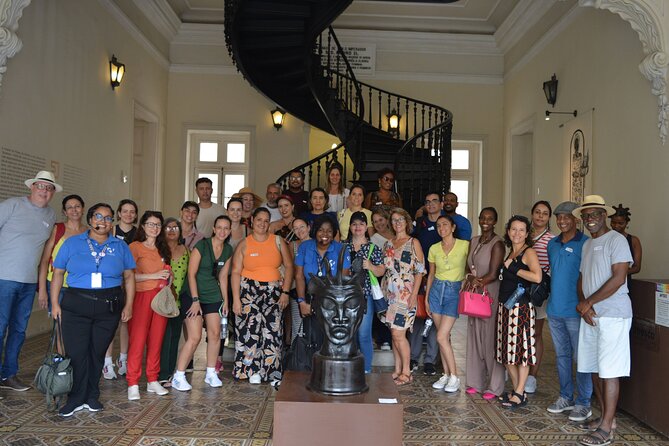
At MUHCAB, the Museum of Afro-Brazilian History and Culture, you spend about 40 minutes. It is described as a territory museum focused on Afro-Brazilian history and culture in the Gamboa region. Admission is free.
This stop broadens the tour beyond the history of slavery. The experience aims to help you understand Afro-Brazilian heritage as an ongoing part of the area and of Brazil, not only as a painful chapter in the past. The museum setting also gives the guide a chance to connect the places you have seen with wider cultural themes.
The museum may be closed during the seasonal shutdown periods noted above. If it is unavailable, the experience of the stop could change, so it is worth confirming the schedule when you choose a date. The listing does not promise a specific substitute.
Valongo Wharf makes the history tangible
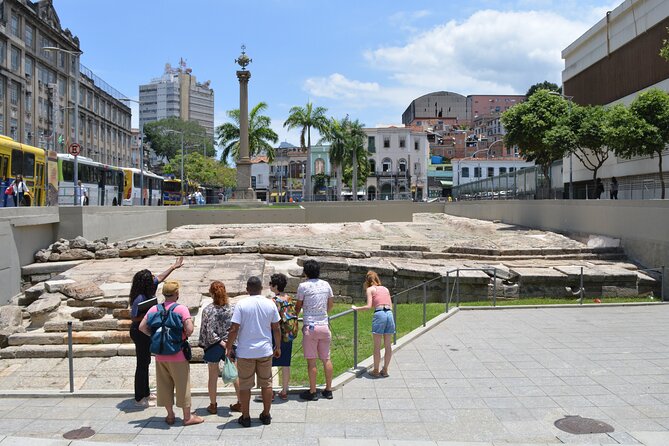
Cais do Valongo, or Valongo Wharf, is a former wharf in Rio’s port district, between today’s Coelho e Castro and Sacadura Cabral streets. The group spends around 30 minutes here, and there is no admission charge.
The value of this stop lies in its setting. A former wharf is not an abstract idea in a book: it is a physical place where your guide can help you consider the history tied to Rio’s port. The tour uses the site to explain the scale and legacy of slavery, while keeping the focus on the lives and histories of Black people in Brazil.
Expect an outdoor visit rather than a long museum presentation. The guide’s interpretation is what gives the site its meaning, so this is a good time to ask questions. The subject matter is serious, and a thoughtful approach helps you take in the place without turning it into a quick photo stop.
More trips and days out around Rio de Janeiro:
- Rio de Janeiro: 6-Stop Highlights of Rio with Lunch
★ 4.4 · 5,157 reviews - Christ the Redeemer Entry Ticket by Corcovado Train
★ 4.4 · 4,476 reviews - Rio de Janeiro: Rocinha Favela Walking Tour with Local Guide
★ 4.8 · 3,052 reviews - Rio de Janeiro: Sugarloaf Cable Car Official Ticket
★ 4.6 · 2,873 reviews
Pedra do Sal connects history with neighborhood life
The route continues to Pedra do Sal, where you spend about 25 minutes outside. This historic and religious landmark is in the Saúde neighborhood, near Largo da Prainha. Admission is free.
Pedra do Sal helps tie the tour’s historical story to a real neighborhood and its identity. The stop is brief, but it offers another angle on Black presence in the area and the way cultural memory attaches to particular places. Your guide provides the background; you should not expect a formal indoor exhibit here.
The pace and the walking are worth keeping in mind. Comfortable shoes are a sensible choice, especially if you are not used to spending several hours on foot. The route also includes a short ride on the VLT, Rio’s public transport, which is included in the final price.
Finish at Largo São Francisco da Prainha
The final stop is Largo São Francisco da Prainha, where the tour ends after about 20 minutes. The square was once a symbolic territory of Little Africa, associated with Black presence and zungus. It is now also described as one of the city’s trendier places.
That mix of past and present makes a fitting end. The tour does not present Little Africa as a chapter sealed away from modern Rio. Instead, the final square lets you think about how the area’s character and public image have changed, while its history remains part of the place.
The ending is practical, too. The tour finishes at R. São Francisco da Prainha, 7, in Saúde, rather than returning to the starting point. If you are meeting someone afterward or planning your next activity, make a note of the end location.
What the walking, pace and group size feel like
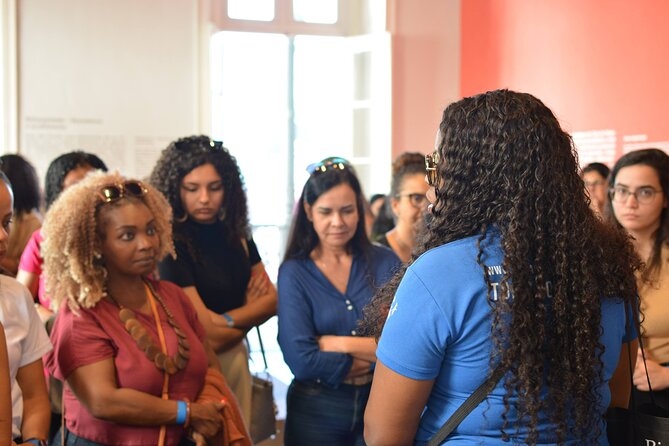
The advertised duration is about three hours and 30 minutes. There are six listed stops, each lasting between 20 and 40 minutes, plus movement between them and the included VLT ride. Some participants have found the experience closer to four hours, so leave a little breathing room rather than scheduling a tight connection immediately afterward.
The group is capped at 20 people. That is large enough to bring together a lively group, but small enough for questions to be part of the day. A guide’s ability to explain the sites clearly is especially important here, since several visits happen outdoors and depend on context.
The walking is considerable, though one family described the pace as manageable with a guide who adjusted it for an older relative. That is encouraging, but the tour is specifically listed as not recommended for people with disabilities. If mobility is a concern, contact the operator before booking rather than assuming the route can be adapted to your needs.
Guides named in connection with the tour include Carolina, Rafael, Malu, Carol and Val. The strongest descriptions of the experience focus on guides who combine historical detail with warmth, clear explanations and a willingness to pace the group thoughtfully. Guide assignments can vary, so do not book on the assumption that a particular person will lead your date.
Is $82.53 a fair price?
At $82.53 per person, this is not a cheap walking tour. But the price covers about three and a half hours with a guide, all fees and taxes, museum admission where applicable, a ticket for the New Black Institute and the short VLT ride. Lunch and tips are not included.
The value depends on what you want from Rio. If you only want a quick look at the neighborhood, you can visit public sites independently. But you would miss the guided connections between Santa Rita, the institute, MUHCAB, Valongo Wharf and Pedra do Sal. Here, the guide is not an add-on; the interpretation is a large part of what you are paying for.
This tour suits you best if you want a fuller understanding of Afro-Brazilian heritage and are prepared for serious subject matter. It is also a good fit if you have enjoyed learning about the African diaspora in other countries and want to consider Brazil’s history from its own perspective. If your priority is a light, mostly scenic outing, this may not be the right half-day.
The activity has a 5.0 rating from 97 reviews, and 99 percent of participants recommend it. Those numbers are strong, but your own experience will depend on the guide, museum opening schedules and your interest in the subject. The tour is most rewarding when you arrive ready to listen, ask questions and give the places time to register.
Practical details before you book
The meeting point is Santuário de Santa Rita, Largo de Santa Rita, in Centro. The tour ends at Largo da Prainha in Saúde. The included VLT ride is short, but the route is not a loop back to the start, so plan onward transport from the final stop.
Wear comfortable shoes and allow for outdoor walking. The tour is suitable for most participants, but it is not recommended for people with disabilities. Service animals are allowed, and the route is near public transportation.
Confirmation is provided at booking. You can cancel up to 24 hours before the start for a full refund; changes or cancellations made inside that 24-hour window are not accepted. The experience requires good weather. If poor weather forces cancellation, you are offered another date or a full refund.
Should you book the Little Africa tour?
Book it if you want to understand more of Rio than its famous viewpoints and beaches, and if you are ready for a thoughtful account of Afro-Brazilian history. The stops are compact, but together they make a compelling route through Little Africa, especially with a guide who brings care and clarity to difficult subjects.
Think twice if you need a low-walking activity, are visiting during the museum closure periods, or prefer a casual sightseeing tour with little historical discussion. For the right visitor, this is a meaningful half-day that can change how you read the streets around the port.
FAQ
How long is the Little Africa tour?
It lasts about three hours and 30 minutes. Allow some extra time in case the tour runs closer to four hours.
Where does the tour start and end?
It starts at Santuário de Santa Rita in Centro and ends at Largo da Prainha in Saúde.
Is the VLT ride included in the price?
Yes. The tour includes a short ride on Rio’s VLT public transport.
What is included in the $82.53 price?
All fees and taxes are included, along with a ticket for the New Black Institute and the short VLT ride. Lunch and tips are not included.
Is the New Black Institute open on Sundays?
No. The New Black Institute is closed on Sundays.
When are the museums closed?
All museums are closed from December 16 to January 5 and during Carnival season.
How much walking should I expect?
There is a considerable amount of walking between the stops. The tour is not recommended for people with disabilities.
Can I cancel for a refund?
You can cancel at least 24 hours before the start time for a full refund. Cancellations made less than 24 hours beforehand are not refunded.
Just added around Rio de Janeiro
- Paraty Historical City Walking Tour★ 4.1 · 8 reviews
- Rio de Janeiro: Zip Lining and Canopy Tree Tour★ 3.3 · 6 reviews
- Hang gliding flight in Rio de Janeiro★ 5.0 · 6 reviews
- Trindade Day Trip: Nature and Sea Adventure from Paraty★ 4.6 · 5 reviews
- Vidigal Favela Tour★ 4.4 · 26 reviews
- Rio Highlights: Christ, Sugarloaf, and More in a Private Tour★ 5.0 · 36 reviews
- Buzios: City Tour by Trolley with 12 Beaches and Pickup★ 4.5 · 4 reviews
- Rio de Janeiro: Attend a Vasco da Gama game with local guide★ 4.8 · 9 reviews
Rio de Janeiro Tours, compared.

Christ the Redeemer Entry Ticket by Corcovado Train
Read our review →


Christ the Redeemer, Sugarloaf, Selaron & BBQ Lunch
Read our review →


Browse the lists this tour appears in