
Reviewed · SANTA TERESA TOURS
Ancient Rio and Santa Teresa Tour with Hotel pick-up and drop-off
Santa Teresa’s old mansions, tiled streets and 1897 tram make a striking contrast with downtown Rio’s grand public buildings and former market lanes. This four-hour tour links both sides of the city’s past, so you can get beyond the familiar beach-and-mountain sights without arranging several separate trips.
I like the way the route pairs Santa Teresa’s quieter, artistic character with the civic landmarks of old Rio. I also like the chance to see buildings such as the Municipal Theatre and National Library from the outside, with a guide to explain why they matter.
The main trade-off is pace: nine stops in about four hours means some visits are brief. And although you’ll see Santa Teresa’s historic tram, a tram ride is not included. Expect walking on uneven streets and confirm your pickup time before the day.
What to know before you book
- Santa Teresa’s 1897 tram is part of the view, not the ride. You may see it in the neighborhood, but the tour does not promise a trip aboard it.
- Downtown stops focus on history and architecture. Several landmark buildings are exterior visits, not museum or theatre admissions.
- The schedule is full. Stop times range from 10 to 60 minutes, with little scope for lingering or adding a café break.
- You travel in an air-conditioned vehicle. The stated maximum is 19 people per minivan, though the actual group may be smaller.
- Hotel pickup needs coordination. The listed starting point is the Rio Othon Palace in Copacabana, and the operator asks you to confirm pickup arrangements for your hotel.
- At $55 per person, it’s an efficient introduction. The value is strongest if you want context and transport between two historic districts, not a long visit inside each site.
Two sides of Rio in one half-day
This outing is a practical way to see a less beach-centered Rio. Santa Teresa sits above the old center, with a slower, residential feel; downtown is where the city’s civic and commercial history is on display. Visiting both helps you understand how Rio grew from colonial port and imperial capital into a modern metropolis.
The air-conditioned vehicle matters here. It saves you from planning your own route between neighborhoods, while the short walks at each stop let you get close to the architecture and street life. The tour is not a substitute for a full museum visit or an unhurried day in Santa Teresa, but it gives you a broad first look.
The price is $55 per person. That is reasonable if you value a guide, hotel transport and a planned route through several places that would take effort to connect on your own. Lunch and museum entry are not included, so think of the cost as transport and guided sightseeing rather than an all-inclusive day.
The tour lasts about four hours. The listed stop times add up to roughly three hours and 40 minutes, so the schedule has little room for long pauses. Traffic, pickup delays or a larger group can also affect how the outing feels. People have had very different experiences with guides and timing, which makes it worth setting expectations: the strongest version is an engaging history-focused tour, while a rushed or low-energy guide can make the same route feel like a series of quick photo stops.
More Santa Teresa tours around Rio de Janeiro:
- Santa Teresa, Lapa, and Cinelândia with Tram Ride and Selarón Steps
★ 4.5 · 274 reviews - Rio de Janeiro: Historic Rio and Santa Teresa Half-Day Tour
★ 4.4 · 228 reviews - Walking tour of the bohemian neighborhoods of Santa Teresa and Lapa
★ 5.0 · 59 reviews
Santa Teresa’s mansions and old tram
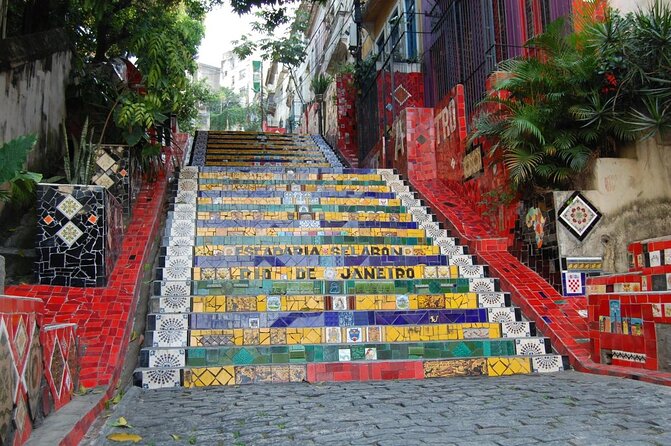
The first stop is Santa Teresa, where you have about an hour to see the neighborhood’s early twentieth-century mansions and get a sense of its artistic past. It is known as a home for painters, and the mix of old houses, street art and shops gives the area a distinct character. The setting is a useful counterpoint to the formal buildings downtown.
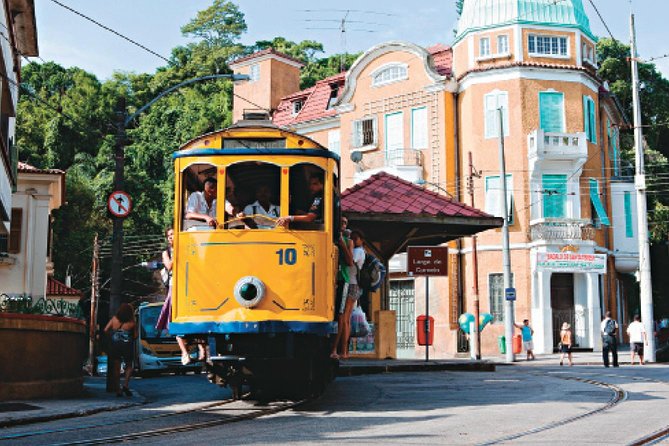
The historic tram dates to 1897 and remains one of the neighborhood’s defining sights. But do not book this tour expecting to ride it. The schedule does not include a tram trip, and fitting one in would take more time. If riding the tram is a priority, ask the operator about a private tour or plan a separate visit.
Santa Teresa’s old streets can be uneven and cobbled. Wear comfortable walking shoes, and consider how much walking works for you before booking. Guides have sometimes adjusted the walking distance for people who needed it, but that should not be treated as a guaranteed feature.
A Monday visit can mean some shops are closed, and the neighborhood may feel quieter than expected. Sunday can be a better choice if you want to see more of its shops or an art fair, though opening hours can vary. The tour’s one-hour stop gives you a taste, not a leisurely browse through every side street.
Parque das Ruínas and Laurinda Santos Lobo’s legacy
The route includes about 20 minutes at Parque das Ruínas, once the home of Laurinda Santos Lobo, an influential supporter of artists. Today, the former residence serves as a cultural center that carries on that association with the arts.
This is one of the stops that gives Santa Teresa more depth than a scenic drive through handsome streets. The house connects the neighborhood’s artistic identity with a particular person and place. The visit is short, however, so treat it as an introduction rather than time for a long exhibition or an extended look around.
From Lapa’s arches to Praça XV
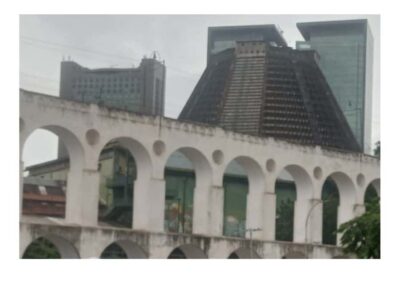
At Arcos da Lapa, you have about 30 minutes. The arches were built to carry water and now form part of the route used by Santa Teresa’s tram. Their scale makes them an easy landmark to recognize, and their changing purpose offers a compact lesson in how Rio’s infrastructure has evolved.
The tour does not include a tram ride here either. Admission is not included for this stop, so clarify any costs with the operator if you are unsure what is covered. The main value is seeing the arches and hearing how they fit into the story of the neighborhood and city.
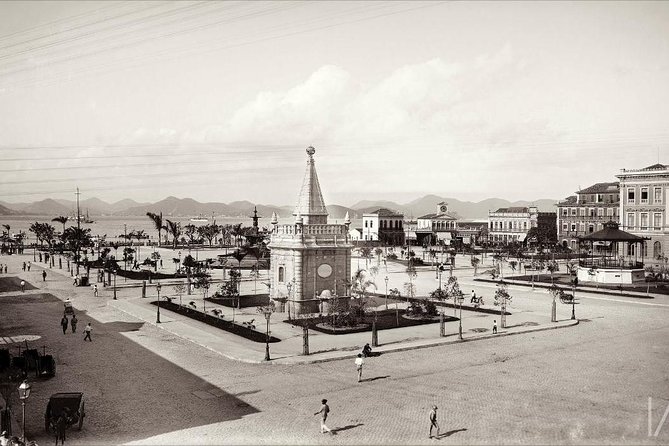
Praça XV de Novembro brings you into the historic center. The square is framed by the Palácio Tiradentes, home to Rio’s Legislative Assembly, and the Paço Imperial. It is also a ferry terminal, with service to destinations in Rio and Niterói. Allow about 30 minutes to take in the square and its surroundings.
This stop works especially well if you want to connect landmark buildings with the city’s day-to-day movement. Praça XV is not only a place to look at façades; the ferry terminal reminds you that the waterfront still serves as a transport link. The tour does not include a ferry trip.
More trips and days out around Rio de Janeiro:
- Rio de Janeiro: 6-Stop Highlights of Rio with Lunch
★ 4.4 · 5,157 reviews - Christ the Redeemer Entry Ticket by Corcovado Train
★ 4.4 · 4,476 reviews - Rio de Janeiro: Rocinha Favela Walking Tour with Local Guide
★ 4.8 · 3,052 reviews - Rio de Janeiro: Sugarloaf Cable Car Official Ticket
★ 4.6 · 2,873 reviews
Arco do Teles and Cinelândia’s public buildings
Arco do Teles is a short 20-minute stop in a part of the old center that once served as the city’s downtown market. Its narrow streets and alleys now hold bars and small restaurants. You get a change of scale here, from monumental civic architecture to more intimate lanes.
That contrast is part of the route’s appeal, but the brief stop may not leave time to sit down for a meal or drink. Lunch is not included, and there is no promise of a café break. If you want to linger in the area, plan to return on your own.
Cinelândia gets about 30 minutes. The square is surrounded by historic buildings and offers good opportunities for photographs. It also sets up the next cluster of exterior visits, where the focus is on the architecture of Rio’s cultural and civic institutions.
The National Museum of Fine Arts, Municipal Theatre and National Library each receive about 10 minutes. You do not enter these buildings on the tour. Instead, you look at their architecture from outside and hear about their roles in the city.
The National Museum of Fine Arts was designed in 1908 by Adolfo Morales de los Rios for the National School of Fine Arts, which followed the Imperial Academy of Fine Arts. The building belongs to the period of urban modernization under Mayor Pereira Passos, when Rio was the federal capital. Even from outside, its formal design helps explain the ambitions of that era.
The Municipal Theatre opened in 1909 and became one of Brazil’s major theatres. It has hosted artists from Brazil and abroad, and since the 1930s it has maintained its own choir, symphony orchestra and ballet company. Ten minutes is enough for an exterior look and a quick explanation, not a performance or guided interior visit.
The National Library, founded in 1810 by King João VI of Portugal, is described as Latin America’s largest library. Its holdings include rare books, manuscripts, letters from Princess Isabel and early newspapers from Brazil. The collection also includes two copies of the Mainz Psalter Bible, printed in 1492. The tour does not take you inside to see these items, but the building itself is an impressive end to the architectural sequence.
If you hope to enter the theatre, library or art museum, check their opening hours and arrange a separate visit. Some outings fall on holidays or days when public buildings are closed, and even when open, this tour does not include interior admission.
Guides, group size and the day’s rhythm
The guide can make a real difference on a history-focused route. Guides who have led this outing include Renato, Dario, Wagner and Monica, among others. Some have been praised for connecting Rio’s colonial past, economics and modern culture; others have been described as less engaging. You cannot assume which guide you will get, so think of the itinerary as the guaranteed framework, not a promise of a particular personality or depth of commentary.
A minivan holds up to 19 people. Some outings have been very small, with only a few people, while others have felt full. A smaller group can make it easier to ask questions and move between stops, but the stated capacity means you should not expect a private experience unless you book one.
The pickup details deserve attention. The meeting point shown is the Rio Othon Palace at Avenida Atlântica 3264 in Copacabana, and the activity ends back at the meeting point. Hotel pickup is offered, but the operator asks you to contact them to confirm the time based on your hotel location. They also say they will contact you with the proper pickup time, so check your email and phone rather than assuming the start time is settled.
Allow for city traffic. During Carnival, traffic problems have delayed departures and lengthened the return journey. A late pickup can be especially uncomfortable in hot weather, so confirm the schedule and keep your plans after the tour flexible.
Who should choose this tour?
I’d choose this tour if you have limited time in Rio and want a guided orientation to Santa Teresa and the old center. It is a good complement to visits to Christ the Redeemer or Sugarloaf Mountain, since the focus here is on neighborhoods, public buildings and the city’s past rather than its best-known viewpoints.
It also suits people who prefer to see a variety of places without arranging every transfer themselves. The air-conditioned vehicle helps connect the stops, and the guide can supply context that is easy to miss when you simply pass through on your own.
I would look elsewhere if you want to ride the tram, spend hours browsing Santa Teresa’s shops, enter several museums or take a long café break. The route covers a lot, but its strength is breadth, not depth. If walking on uneven cobblestones is difficult, contact the operator before booking and ask what adjustments are possible.
Should you book it?
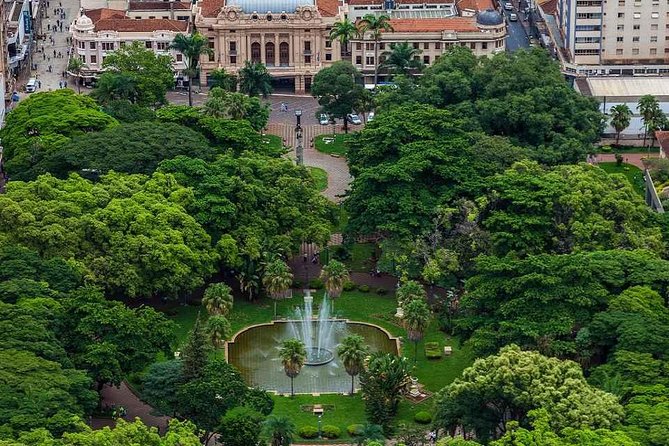
Book the Ancient Rio and Santa Teresa Tour if you want a compact, guided look at two very different parts of Rio, and you are content with short stops and exterior visits. At $55, the combination of transport, a local guide and a broad route offers useful value for a first visit or a short stay.
Skip it if your priority is a tram ride, museum interiors or unhurried time in one neighborhood. Before you commit, confirm the pickup time, ask about the walking involved and keep your expectations realistic about the pace. The route has plenty to see; the key is deciding whether you want an overview or time to linger.
FAQ
How long is the tour?
It lasts about four hours.
How much does it cost?
The listed price is $55 per person.
Where does the tour start and finish?
The stated meeting point is the Rio Othon Palace at Avenida Atlântica 3264 in Copacabana. The activity ends back at the meeting point.
Is hotel pickup included?
Hotel pickup and drop-off are offered. The operator asks you to confirm the pickup time based on your hotel location.
Does the tour include a ride on Santa Teresa’s tram?
No tram ride is included. The route lets you see the historic tram, but does not promise a ride.
Are museum admissions included?
No. Museum entrance is not included, and the National Museum of Fine Arts, Municipal Theatre and National Library are exterior visits.
Is lunch included?
No. Lunch is not included.
How many people can join the minivan tour?
The stated maximum is 19 travelers per minivan. At least two people are required for the activity to run.
What is the cancellation policy?
You can cancel for a full refund up to 24 hours before the experience’s start time. If poor weather or the minimum group requirement causes cancellation, you will be offered another date or experience, or a full refund.
Just added around Rio de Janeiro
- Paraty Historical City Walking Tour★ 4.1 · 8 reviews
- Rio de Janeiro: Zip Lining and Canopy Tree Tour★ 3.3 · 6 reviews
- Hang gliding flight in Rio de Janeiro★ 5.0 · 6 reviews
- Trindade Day Trip: Nature and Sea Adventure from Paraty★ 4.6 · 5 reviews
- Vidigal Favela Tour★ 4.4 · 26 reviews
- Rio de Janeiro: Attend a Vasco da Gama game with local guide★ 4.8 · 9 reviews
- Rio Highlights: Christ, Sugarloaf, and More in a Private Tour★ 5.0 · 36 reviews
- Buzios: City Tour by Trolley with 12 Beaches and Pickup★ 4.5 · 4 reviews
Santa Teresa Tours, compared.

Santa Teresa, Lapa, and Cinelândia with Tram Ride and Selarón Steps
Read our review →

Walking tour of the bohemian neighborhoods of Santa Teresa and Lapa
Read our review →
Centro Historico and Lapa – Santa Teresa Walking, Historical and Bohemian Tour
Read our review →


Browse the lists this tour appears in