Reviewed · RIO DE JANEIRO TOURS
Rio de Janeiro Downtown Tour
Rio’s downtown story comes in sharp contrasts: a football monument at Maracanã, the grand route of Carnival, a modern cathedral and a monastery whose plain exterior gives way to ornate Baroque decoration. This three-hour tour links those sights by minivan, giving you a broad first look at a part of the city that can be tricky to cover on your own.
I like the mix of landmark stops and neighborhood views, especially the chance to see the Selarón Steps and São Bento Monastery in the same outing. I also like that the guide can shape the conversation around your interests; guides such as Meilin, Mailee, Cabo and Monica have been praised for their explanations and attention to the group.
The trade-off is time on the road. You’ll see many places from the minivan, and Rio traffic can eat into an already short visit, so this suits you better as an orientation tour than as a slow, in-depth exploration.
- Maracanã and the Sambadrome bring Rio’s football and Carnival landmarks into one opening stretch.
- Downtown’s grand avenues pass palaces, the Central Railway Station and Campo de Santana, often viewed from the vehicle.
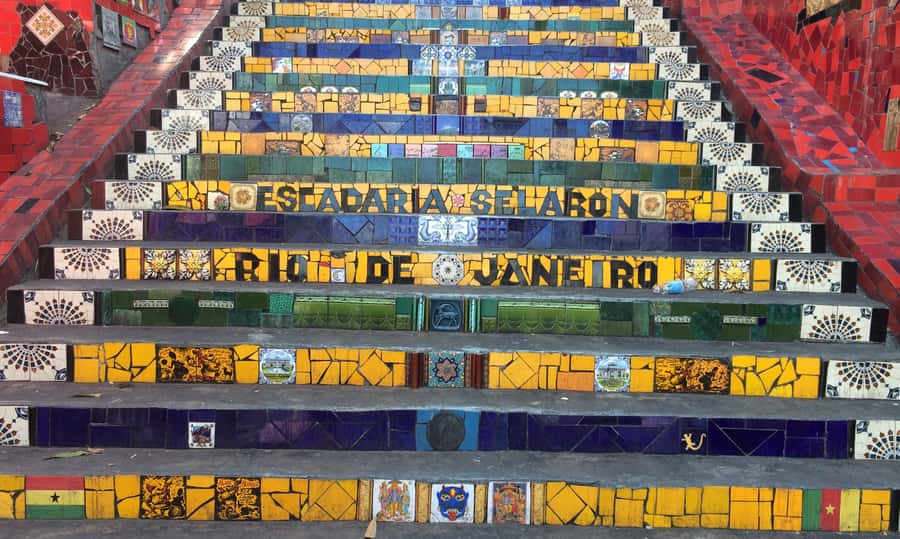
- The Selarón Steps are a key stop in Lapa, with their flag-colored tiles and personal tribute to Brazil.
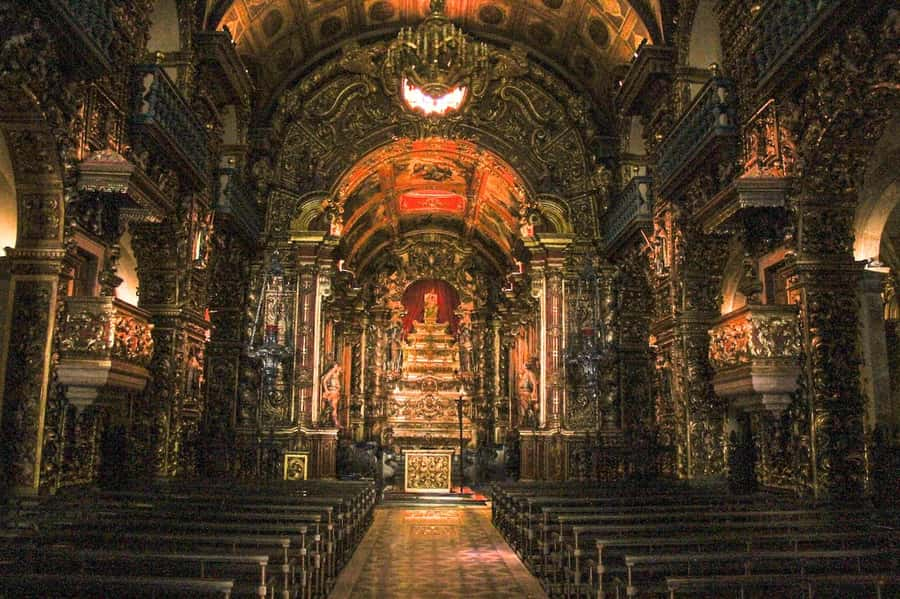
- São Bento Monastery pairs a simple exterior with ornate gilded Baroque and Rococo interiors.
- Three hours, small group, air-conditioned minivan make this a convenient overview, but not a walking tour.
- Pickup is limited to selected hotels in Copacabana, Ipanema and Leblon, with the Hilton Hotel Copacabana as the meeting point for those outside the area.
A quick route through Rio’s many identities
This tour is designed to show you a lot of central Rio in a short time. It begins with hotel pickup in the South Zone, then moves through sporting and Carnival landmarks, historic downtown streets, Lapa and the waterfront before returning to Copacabana, Ipanema or Leblon.
That broad sweep is its main strength. In a single outing, you get a sense of how different parts of Rio fit together, from the city’s grand civic buildings to its religious art and famous public spaces. You’ll also hear a guide’s explanations as the scenery changes, which helps turn a string of names into a more coherent picture.
The same format sets a limit. Three hours is not enough for long visits at every stop, and the route includes considerable time in the vehicle. Think of it as a guided overview with a handful of opportunities to get out, not a deep walking visit to each landmark.
Maracanã and the Sambadrome set the scene
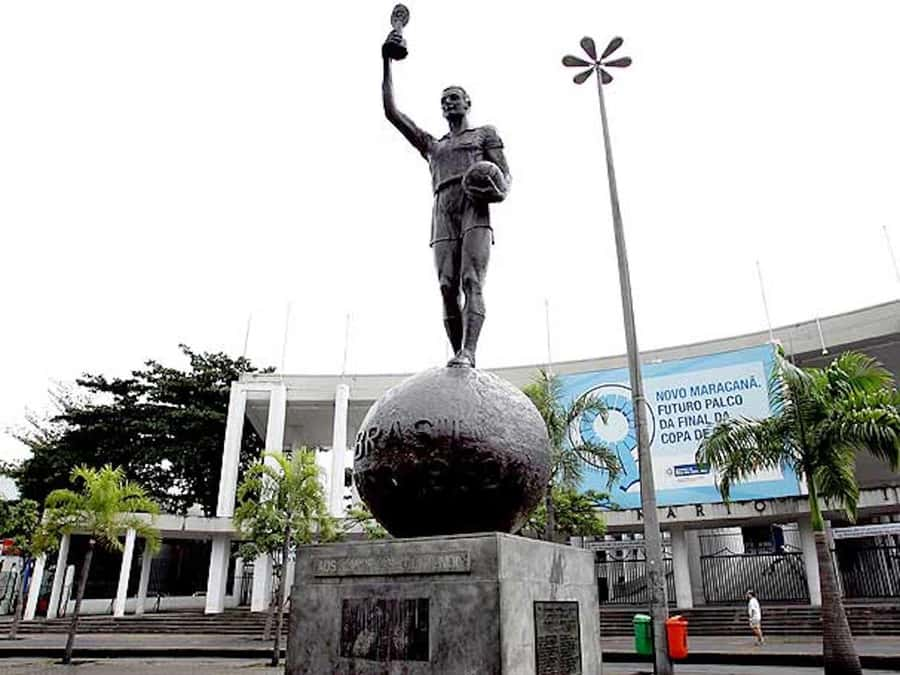
The route starts at Maracanã Stadium, with a visit to the Bellini statue, then continues to the Sambadrome, the venue for Rio’s main Carnival parade. These stops introduce two major parts of the city’s public life: football and Carnival.
The stadium stop focuses on the statue rather than a full stadium visit. If you hope to go inside Maracanã, this tour does not promise that; its value here is the chance to see the landmark and hear context from your guide. The Sambadrome is another exterior-oriented stop, so expect an overview of the parade venue rather than a Carnival event or backstage visit.
I like this opening because it gives the day a clear sense of place. Even if you’re not a football fan or a Carnival expert, these sites help explain why the city’s identity is so closely tied to large shared celebrations and spectacles.
More trips and days out around Rio de Janeiro:
- Rio de Janeiro: 6-Stop Highlights of Rio with Lunch
★ 4.4 · 5,157 reviews - Christ the Redeemer Entry Ticket by Corcovado Train
★ 4.4 · 4,476 reviews - Rio de Janeiro: Rocinha Favela Walking Tour with Local Guide
★ 4.8 · 3,052 reviews
Downtown’s monumental avenues are mostly a moving view
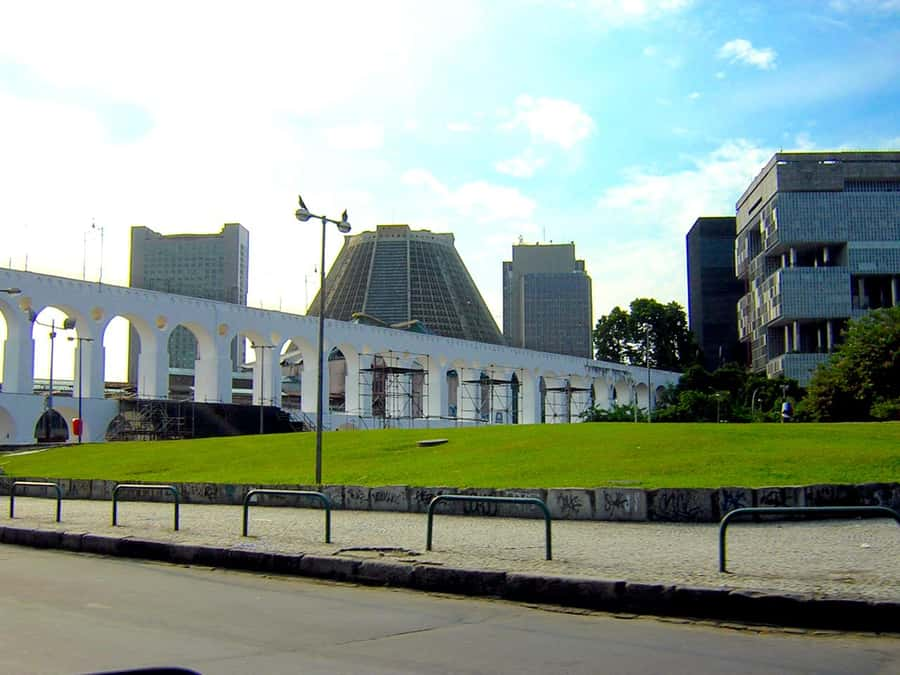
From the Sambadrome, the minivan follows Avenida Presidente Vargas past the Central Railway Station, Duque de Caxias Palace and Itamaraty Palace, as well as Campo de Santana. The route then continues along Avenida Passos toward Tiradentes Square, before passing Lapa Arches, Lavradio Street and Avenida Chile.
This stretch is a good example of the tour’s practical trade-off. You get a guided look at a number of civic and historic landmarks without having to navigate the broad avenues yourself. But many are seen through the window, and the tour does not promise a separate stop at each one.
Traffic matters here. One participant found that congestion and short stops made the experience feel too much like a drive-by tour for the price. That’s worth taking seriously when you decide what you want: if you’d rather linger, take photos at length or go inside several buildings, you may prefer to visit fewer sights independently.
On the other hand, the moving overview can help you recognize places you might want to return to. A guide can point out the former military headquarters at Duque de Caxias Palace and the former Foreign Ministry headquarters at Itamaraty Palace, while you get a sense of the scale and rhythm of downtown.
The Metropolitan Cathedral brings a striking change of form

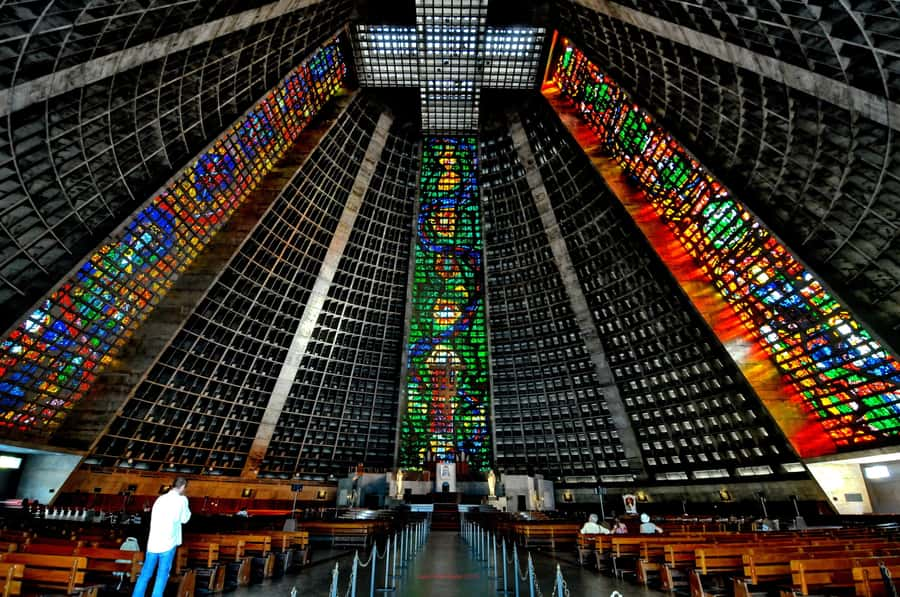
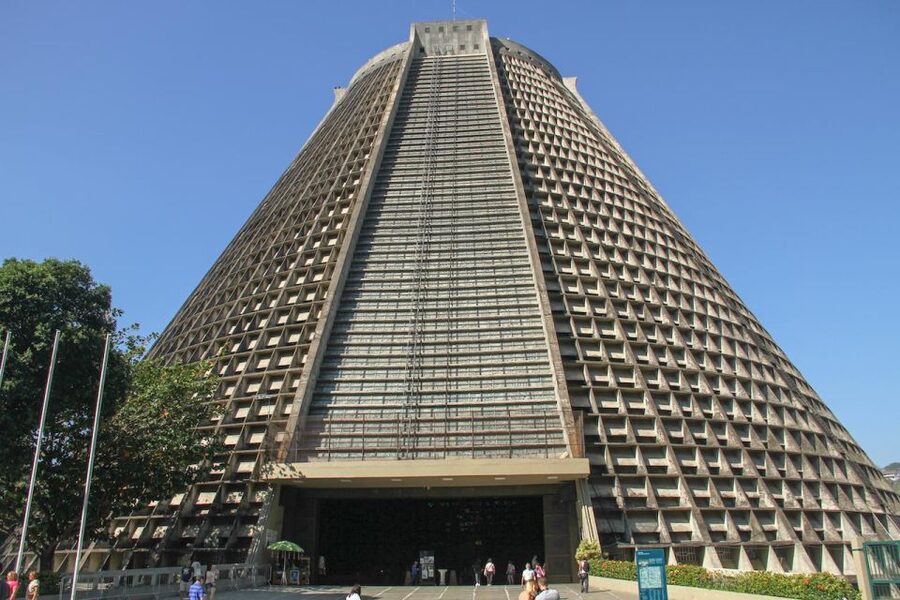
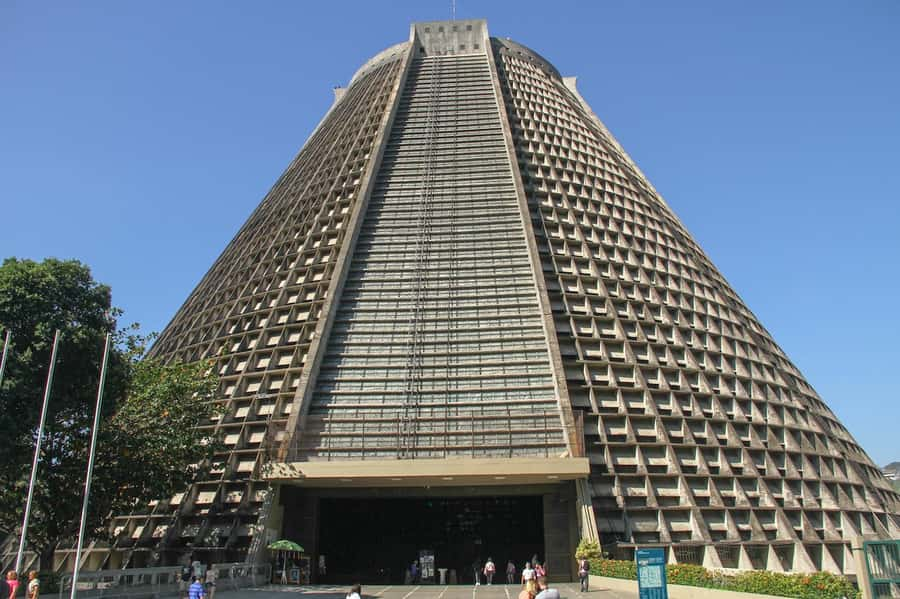
The tour pauses at Rio’s cone-shaped Metropolitan Cathedral, one of the city’s best-known landmarks. Its modern form contrasts sharply with the older palaces and religious architecture on the route, and the building is described as a work of modern art.
This is one of the more distinctive stops because the shape is so unlike the familiar image of a traditional church. You can take in the exterior and, depending on the time allowed, see more of the building from inside. The tour information does not specify how long the stop lasts, so don’t plan on an extended visit.
I’d pay attention to how the cathedral changes the mood of the day. After the formal façades and avenues of downtown, its unusual design makes a strong visual break before the route turns toward Lapa.
Lapa and the Selarón Steps reward a closer look
Lapa brings the tour into one of Rio’s best-known bohemian neighborhoods. The main draw is the Escadaria Selarón, the staircase created by artist Jorge Selarón, whose green, yellow and blue tiles echo the colors of the Brazilian flag and serve as a tribute to the Brazilian people.
This is a place where a short stop can still feel worthwhile. The steps are unusually personal and made for close looking: the color and arrangement of the tiles give the staircase its own character, quite different from the grand civic buildings earlier in the tour. You’ll want time to take it in and photograph it, so keep in mind that the overall schedule is tight.
The route also passes the Lapa Arches and Lavradio Street. Those views help give the neighborhood context, even if you don’t have time to explore its streets on foot. If Lapa is high on your list, ask your guide how much time is available at the steps and what the schedule allows.
Same city, a different kind of day:
- Rio de Janeiro: Sugarloaf Cable Car Official Ticket
★ 4.6 · 2,873 reviews - Rio: Christ the Redeemer, Sugarloaf, Selaron & BBQ Lunch
★ 4.5 · 2,428 reviews - Rio De Janeiro: Half-Day Rocinha Favela Walking Tour
★ 4.7 · 2,272 reviews - Rio de Janeiro: Angra dos Reis and Ilha Grande Full-Day Tour
★ 4.6 · 1,673 reviews
São Bento Monastery offers a quiet interior contrast
São Bento Monastery is the tour’s clearest contrast between plain exterior and elaborate interior. The outside has a deliberately simple, monastic look; inside, the decoration includes gilded Baroque carvings with plant motifs and Rococo work around the high altar, cross vaulting and Chapel of the Blessed Sacrament.
The change in atmosphere is part of what makes this visit worthwhile. From the street, the building may not hint at the detail inside, so you’ll appreciate having time to look carefully rather than simply passing by. It has been compared to a museum, but its religious purpose remains central to the experience.
This is also a stop where the guide’s explanation can add real value. Details in the carvings and altar are easier to notice when someone points out what to look for. Still, the tour’s short duration means you should not assume you’ll have an unhurried visit to every section.
The return along Flamengo Bay rounds out the city view
On the way back, the minivan follows Aterro do Flamengo past the Museum of Modern Art, the Monument to the Fallen in World War II and the Church of the Outeiro da Glória. The route also takes in Flamengo and Botafogo beaches.
This final stretch gives you a different impression of Rio after the density of downtown and Lapa. Rather than another cluster of stops, it is mainly a scenic return route, with the bay and beaches appearing along the way. If you have a window seat, you’ll get more from this part of the trip.
The tour ends with drop-off at your hotel in Copacabana, Ipanema or Leblon. That return transfer is useful after a busy afternoon, especially if you’re still getting oriented, but it also means the tour is best treated as a packaged route rather than a hop-on, hop-off outing.
What the guide and small group add
The tour includes a professional guide, an air-conditioned minivan and a small-group format. The guide speaks English or Spanish, and the experience can be more engaging when you ask questions or share what interests you. Several guides named by participants include Meilin, Mailee, Cabo and Monica; guide assignments may vary.
A particularly useful quality is flexibility. Some groups have been able to adjust the route or focus to suit their interests, and one person traveling alone had a private experience. That does not mean you should expect a private tour, but it suggests the format can feel personal when the group is small.
The strongest praise has centered on guides who explain the city clearly, answer questions and take the group’s needs into account. That matters on a route with many sights viewed from the vehicle: a good explanation can make a brief pass-by feel more meaningful. At the same time, a guide cannot make traffic disappear or turn a short stop into a long visit.
Is $74 a fair price for three hours?
At $74 per person, you’re paying for transport, hotel pickup and drop-off in the selected areas, a professional guide and a compact route covering several parts of the city. The value is strongest if you want an easy introduction without organizing transport between Maracanã, downtown, Lapa and the waterfront yourself.
It is less compelling if your priority is time inside attractions or a largely walking-based tour. A recent participant felt the amount of driving, traffic delays and brief stops did not justify the cost. That concern is fair: the price buys convenience and breadth, not a long visit at each sight.
I’d compare the cost with what you’d spend arranging a private vehicle and guide, while being clear about the limits of a three-hour group outing. If you’re new to Rio and want a guided overview, the price may make sense. If you already know the city or want to explore at your own pace, you may get better value by choosing fewer places and spending longer at each.
Who should book this tour?

This tour suits a first-time visitor who wants a quick orientation and prefers riding between sights to sorting out transport independently. It also works well if you have a short stay and want to see landmarks across several neighborhoods in one afternoon.
You’ll get more from it if you enjoy learning as you go and are comfortable with some sights being viewed from the minivan. It is a weaker fit if you want extended museum visits, lots of time for photography, or a walking tour focused on one neighborhood.
Pickup is available from selected hotels in Copacabana, Ipanema and Leblon between 2 pm and 2:30 pm. If your hotel is outside those areas, the meeting point is the Hilton Hotel Copacabana, so check your location before booking. Confirmation is subject to availability, and you can reserve now and pay later or cancel up to 24 hours in advance for a full refund.
Should you book it?
Book this tour if you want a guided, comfortable first look at Rio’s major downtown sights, and you’re willing to trade depth for range. Its best moments are the contrast between the city’s landmarks, the Selarón Steps and São Bento’s ornate interior, backed by guides who can adapt the conversation to your interests.
Skip it if you want to spend substantial time inside each attraction or dislike being in a vehicle while traffic builds. For the right expectations, this is a useful orientation tour, not a substitute for returning to the places that catch your eye.
FAQ
How long is the Rio de Janeiro Downtown Tour?
The tour lasts three hours.
What is the price?
The listed price is $74 per person.
Which languages are available?
The live guide speaks English or Spanish.
Where does hotel pickup operate?
Pickup is available from selected hotels in Copacabana, Ipanema and Leblon.
What if my hotel is outside the pickup area?
The meeting point is the Hilton Hotel Copacabana.
What is included in the tour?
A professional guide, a small-group tour, an air-conditioned minivan, and hotel pickup and drop-off at selected hotels are included.
Can I cancel or pay later?
You can reserve now and pay later. You can cancel up to 24 hours in advance for a full refund.
Just added around Rio de Janeiro
- Paraty Historical City Walking Tour★ 4.1 · 8 reviews
- Rio de Janeiro: Zip Lining and Canopy Tree Tour★ 3.3 · 6 reviews
- Hang gliding flight in Rio de Janeiro★ 5.0 · 6 reviews
- Trindade Day Trip: Nature and Sea Adventure from Paraty★ 4.6 · 5 reviews
- Vidigal Favela Tour★ 4.4 · 26 reviews
- Buzios: City Tour by Trolley with 12 Beaches and Pickup★ 4.5 · 4 reviews
- Rio de Janeiro: Attend a Vasco da Gama game with local guide★ 4.8 · 9 reviews
- Rio Highlights: Christ, Sugarloaf, and More in a Private Tour★ 5.0 · 36 reviews
Rio de Janeiro Tours, compared.


Christ the Redeemer Entry Ticket by Corcovado Train
Read our review →


Christ the Redeemer, Sugarloaf, Selaron & BBQ Lunch
Read our review →